
qq音乐
300-year-old painting stolen by an American soldier during WWII returned to museum_我的网站

一 | CHICAGO -- After a stopover in the U.S. that lasted the better part of a century, a baroque landscape painting that went missing during World War II was returned to Germany on Thursday. The FBI handed over the artwork by 18th century Austrian artist Johann Franz Nepomuk Lauterer to a German museum representative in a brief ceremony at the German Consulate in Chicago, where the pastoral piece showing an Italian countryside was on display. Art Recovery International, a company focused on locating and recovering stolen and looted art, tracked down the elusive painting after a person in Chicago reached out last year claiming to possess a “stolen or looted painting” that their uncle brought back to the U.S. after serving in World War II.The painting has been missing since 1945 and was first reported stolen from the Bavarian State Painting Collections in Munich, Germany. It was added to the database of the German Lost Art Foundation in 2012, according to a statement from the art recovery company. “The crux of our work at Art Recovery International is the research and restitution of artworks looted by Nazis and discovered in public or private collections. On occasion, we come across cases, such as this, where allied soldiers may have taken objects home as souvenirs or as trophies of wars," said Christopher Marinello, founder of Art Recovery International. "Being on the winning side doesn’t make it right,” he added.The identity of the Chicago resident who had the painting was not shared. The person initially asked Marinello to be paid for the artwork.“I explained our policy of not paying for stolen artwork and that the request was inappropriate,” Marinello said. “We also know that someone tried to sell the painting in the Chicago art market in 2011 and disappeared when the museum put forth their claim.” But with the help of the FBI Art Crime Team, attorneys, and the museum, Marinello negotiated an unconditional surrender of the artwork.The painting, titled “Landscape of Italian Character,” will now reunite with its counterpart, which shares similar motifs and imagery, according to the museum.The two paintings together form a panoramic scene featuring shepherds and travelers with their goats, cows, donkeys and sheep at a ford in a river. The pair will soon be displayed together for the first time since World War II at the Alte Pinakothek in Munich, according to Bernd Ebert, the museum's chief curator of Dutch and German baroque paintings.Retrieving a long-lost painting "is actually a very rare moment for us,” Ebert said. “It’s exciting.”The Vienna-born artist, Lauterer, lived from 1700 to 1733.When war broke out in 1939, many Bavarian museum collections were evacuated to safe locations in the region, but the Lauterer painting has been missing since the beginning of the war, suggesting the possibility that it had been looted, according to the museum.The Bavarian State Painting Collections first started searching for the painting between 1965 and 1973, but no clues about its location emerged until decades later.Ebert, who flew from Munich to Chicago to retrieve the painting, will carefully bubble-wrap the centuries-old landscape to take it back home, where it will be touched up and restored after an eventful several decades.Luckily, Ebert said, it should fit in his suitcase.___Savage is a corps member for the Associated Press/Report for America Statehouse News Initiative. Report for America is a nonprofit national service program that places journalists in local newsrooms to report on undercovered issues.。

二 |
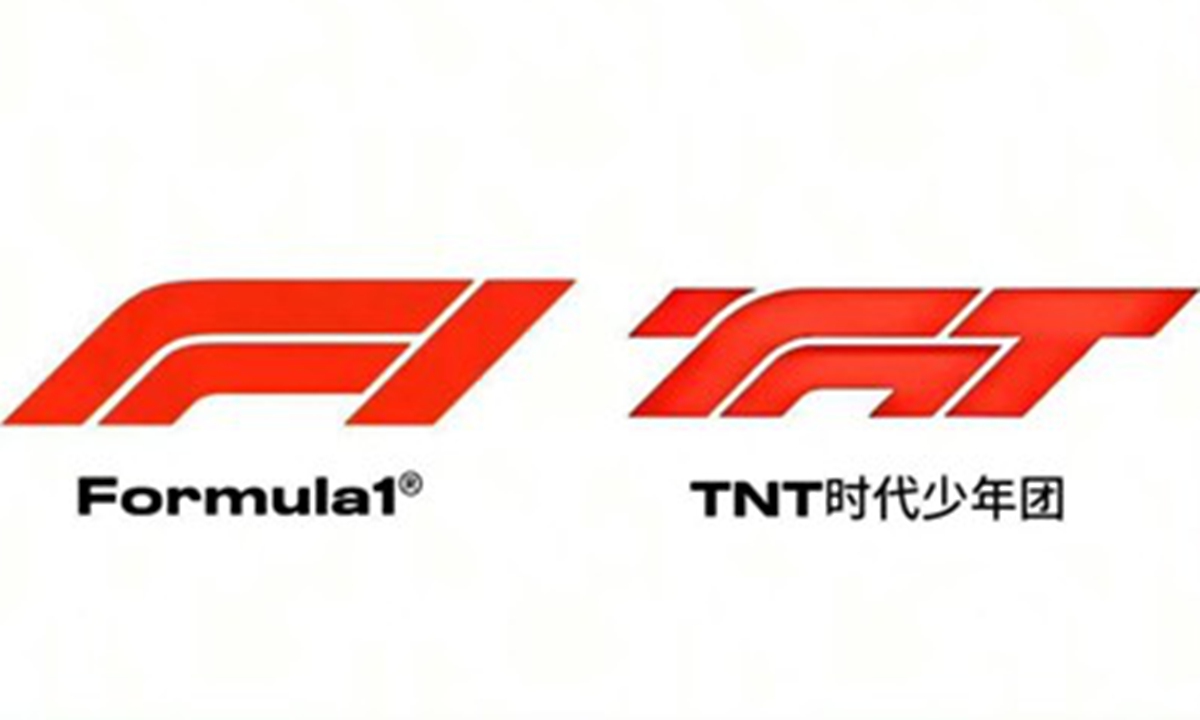
Formula 1 (F1) has referred information about the logo used for a concert tour by Chinese boy group Teens in Times (TNT) to the appropriate team for review and investigation, after motorsport fans said that the design closely resembles F1's trademark, multiple Chinese media outlets reported.
According to Beijing Youth Entertainment, F1 said in a formal response that "the information provided had been referred to the appropriate team and was currently under review and investigation."
Time Fengjun, a Beijing-based talent agency that manages popular idol groups including TNT, has meanwhile blurred the logo in its official concert videos, according to a report by Beijing Youth Entertainment.
Time Fengjun designed the promotional logo for TNT's racing-themed concert in May. Some motorsport fans said that the logo's red, three-part slanted design with a concave curve in the middle closely resembles the outline of F1's current trademark, which was introduced in 2017, with the original "F1" lettering replaced by "TNT."
The concert's stage screens, official footage and merchandise also feature elements resembling F1's visual style, which were used in ticket sales, performances and other commercial promotions, according to reports. No authorization from F1 has been reported.
Motorsport fans had reportedly raised concerns with Times Fengjun through official communication channels as early as July, but the company did not initially take action, Beijing Youth Entertainment reported.
Li Yunkai, an intellectual property lawyer at Beijing-based Beijing Tianyuan Law Firm, cautioned that F1's response does not mean that trademark infringement has been established already.
From a Trademark Law perspective, it would be premature to conclude that TNT has infringed F1's trademark based solely on the two images circulating online. More accurately, if the logo was indeed used without authorization from F1 and was used as a source-identifying mark in connection with the concert and its commercial promotion, there could be a relatively high risk of trademark infringement, he said.
F1's rights holder has registered relevant figurative trademarks in China, including No. 76729750 in Class 41, covering entertainment and performance-related services, according to Li. The case would be assessed based on factors including the similarity of the marks and services and the likelihood of consumer confusion, in line with China's trademark infringement standards.
The two logos are not identical but share similarities in their overall shape, slant, lines and visual style. The concert's broader racing-themed imagery could also be relevant in assessing whether consumers might believe there was an affiliation, sponsorship or authorization by F1, said the lawyer.
If the concert also used F1-associated elements such as "RACETRACK," racing and track imagery, or checkered flags, those elements could be relevant to assessing the likelihood of consumer confusion and the intent behind the use. Courts would consider the broader context in which the logo was used, rather than comparing the two logos as isolated graphic designs, including whether consumers might believe the concert had an authorization, partnership or sponsorship relationship with F1.
"A final determination would depend on the specific F1 trademark at issue, the scope of services covered by the registration, how the logo was actually used and the evidence presented by both sides," Li told the Global Times.

。
Current article:http://9ni0.rangnehongranlinren.bond/xn1b9/cdt.html
Published on:19:57:14